
Why Your Postcode Isn't Enough: Finding an Address in the New Forest
A New Forest postcode frequently identifies an area rather than a property. Holiday lets sit down unmarked tracks, several homes share one postcode, and large sites have entrances satnav does not distinguish. Send the property name, the approach side, any gate or cattle grid, and — if you have it — a what3words address, and a driver arrives at your gate rather than at the end of a lane.
By JAX, New Forest Taxi Driver · Last reviewed · How we check this
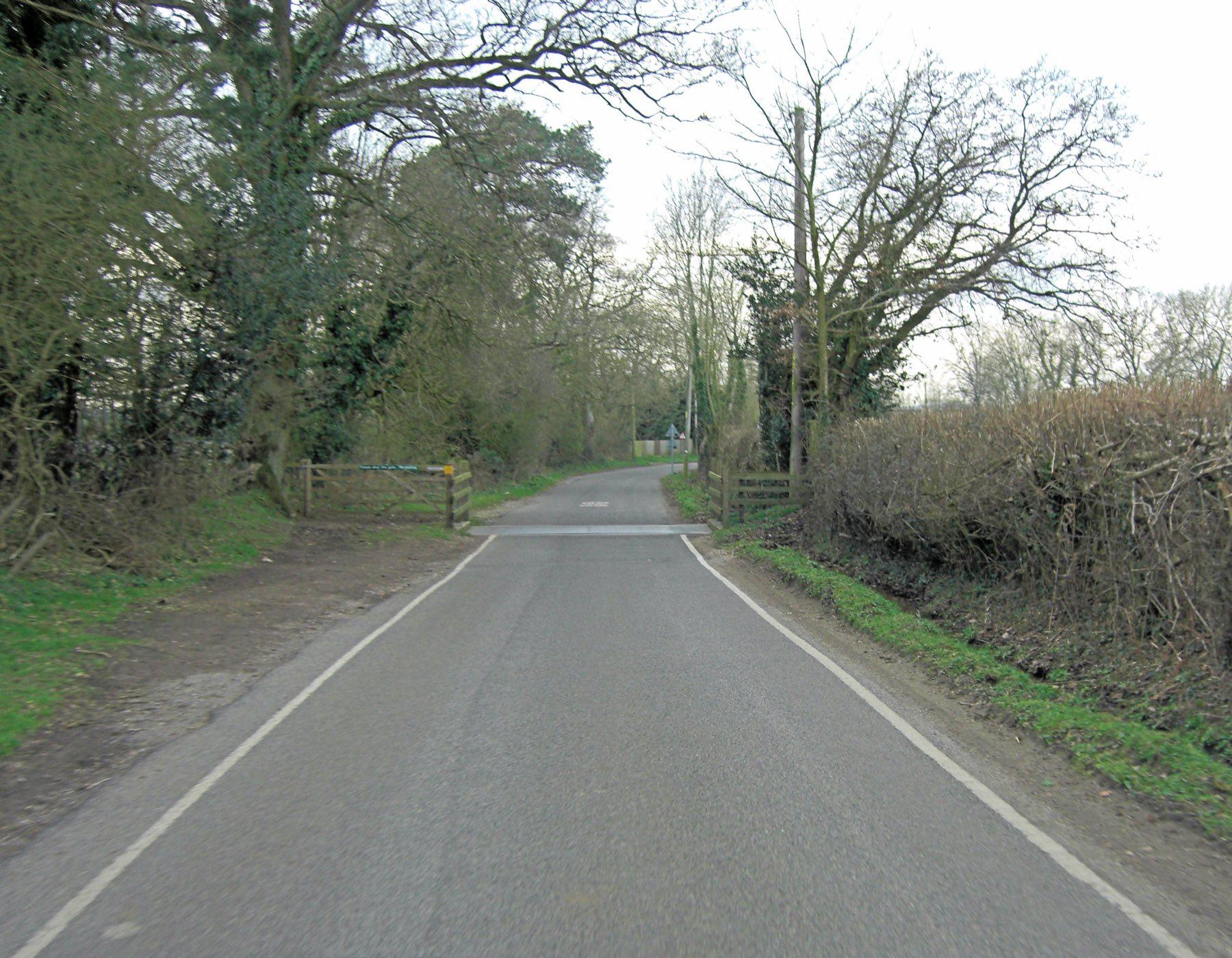
What actually goes wrong
Almost nobody gives a bad address on purpose. What happens is more ordinary: you copy the postcode from the booking confirmation your holiday let sent you, because in most of the country a postcode and a house number are enough. Here they often are not.
The three failures we see most are the same every season. The driver reaches the end of a named lane and finds four entrances with no numbers on any of them. The satnav announces arrival on a stretch of open road with no building in sight, because the postcode centroid sits in a field. Or the driver arrives at the correct large site — a hotel, an estate, a marina — and is at the wrong end of it, which on a dark morning might as well be a different village.
None of these are dramatic. Each one costs between five and twenty-five minutes, and an airport transfer is the one journey where that matters, because the margin you built for the M27 gets spent in a lane instead.
Why New Forest postcodes behave differently
A postcode is a delivery route, not a coordinate. In a town it usually covers one short street, so the distinction never shows. Across the Forest a single postcode can stretch over a scatter of cottages, a working farm, a couple of holiday lets and a stretch of unfenced road between them.
Add the two things that make this area specifically awkward. A great many properties here are named rather than numbered — the lane has a name, the cottage has a name, and there is no number anywhere in the address for a satnav to anchor to. And much of the mapping of private tracks, shared drives and forest approaches is thin, so the route simply stops at the point where the public road ends.
| What you send | What a driver can do with it |
|---|---|
| Postcode only | Reach the area. Then guess between entrances, or call you. |
| Postcode + house number | Reliable in Totton, New Milton or Lymington town. Unreliable on a named lane. |
| Postcode + property name | Reach the right property in most cases, if the name is on the gate. |
| Postcode + property name + approach note | Arrive at the correct entrance first time, in the dark, without calling. |
| A what3words address | Drive to a 3-metre square — the exact gate, pitch or door you stood on. |
The four details worth sending
The property name, in full. Not "the white cottage" — the name as it appears on your booking, and ideally as it appears on the gate, because those are sometimes different. If the owner gave the place one name and the sign says another, tell us both.
Which side of the lane. On a single-track road with passing places, knowing the entrance is on the left coming from the village means the driver is not turning around in somebody's drive at five in the morning.
Gates, grids and shared drives. A cattle grid is the single most useful landmark in this part of the world, because there are not many of them and they are unmistakable. "Second entrance after the cattle grid" is a better instruction than any postcode. Say if a gate is closed, if it is shared with a neighbouring property, or if there is a code.
A mobile number that will be awake. Not as a substitute for the rest — as the fallback when something changes. If the driver can send one message instead of circling, nobody loses time.
what3words: three words for a 3-metre square
what3words divides the entire world into 3-metre by 3-metre squares and gives every one of them a unique combination of three words. The square your gate stands on has three words; the square at the end of your drive has three different ones. You send the words, and the driver's map goes to that square rather than to the middle of your postcode.
For a rural pickup this solves the one thing an address cannot: it describes a point rather than a property. It is genuinely useful for a camping pitch, a field entrance used for a wedding, a marina berth, a footpath gate where a lane is too narrow for a car, or a holiday let whose drive is three hundred metres from the road.
The app is free on both phone platforms and works offline once the map area has loaded, which matters here — mobile coverage across the Forest is patchy enough that you should find your three words before you need them, not while standing in the dark trying to. Stand on the exact spot you want to be collected from, read the three words, and send them with your booking.
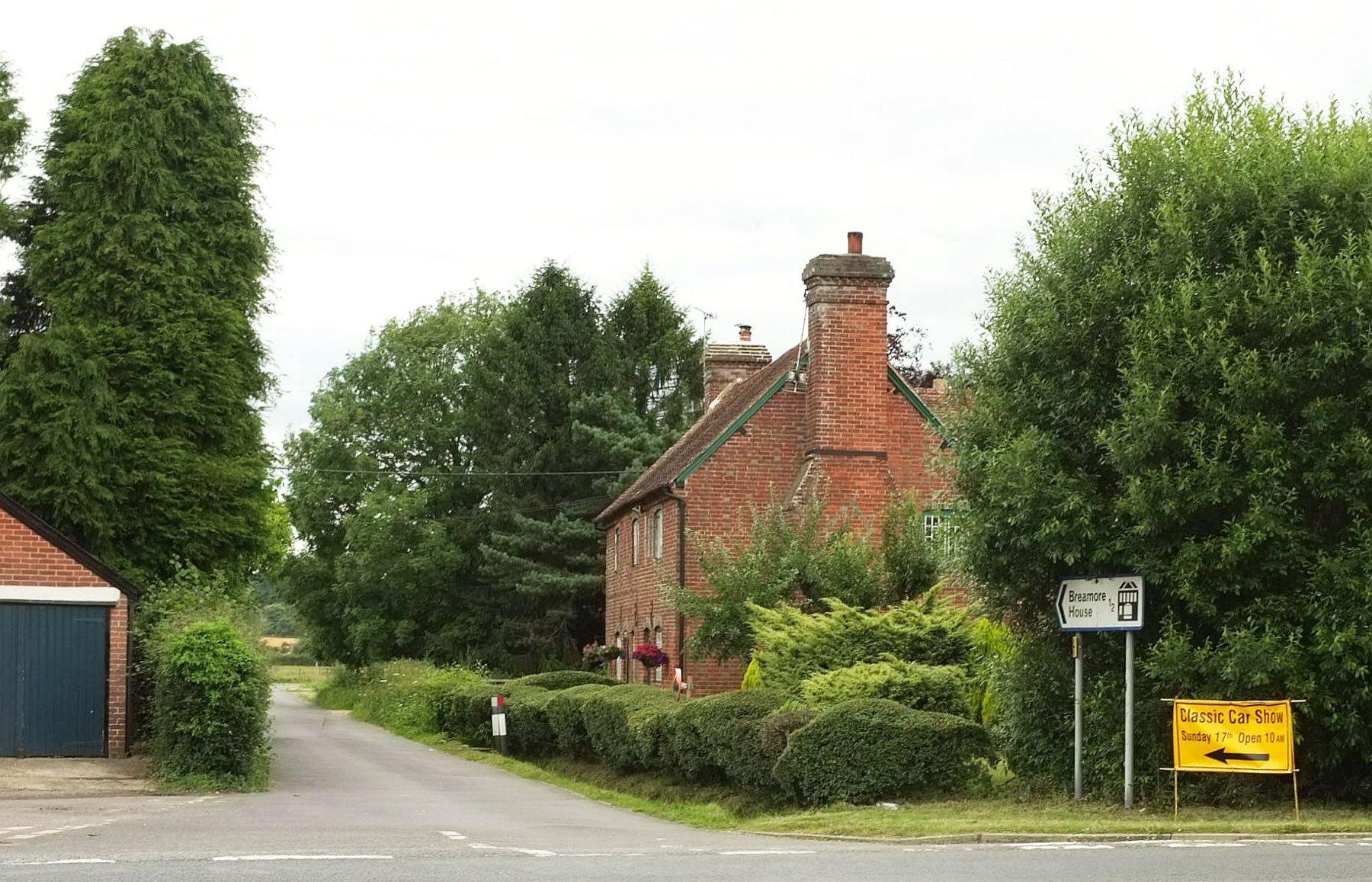
Where this bites hardest, village by village
Burley and the lanes around it. Holiday lets down named lanes rather than numbered streets, and a postcode district that covers far more ground than one cottage. Every road into Burley crosses unfenced forest, so the approach is slower than the distance suggests before you add the address problem.
Out towards Rhinefield and Standing Hat. Several Brockenhurst addresses share postcodes, and the entrance is frequently not the one satnav makes obvious. The unfenced roads here are also where ponies, donkeys and cattle genuinely do have right of way, which is a timing factor as well as an address one.
Hythe Marina Village. A rare case where the postcode is fine and the internal layout is the problem — the arrangement of the site confuses satnav reliably. For a Hythe pickup, name the berth, the gate or the house within the marina.
Ashurst and the campsites. The station approach and the A35 frontage are quick for a driver to find. The campsite and the lanes behind the village are not, so an Ashurst pitch wants its pitch number and a meeting point at the entrance rather than the site postcode.
Estate addresses at Beaulieu. Large site, multiple entrances, and an early airport pickup is exactly the wrong time to discover which gate is the right one — so a Beaulieu collection wants the property name, the full postcode and the entrance, agreed before the day.
Stations and large sites are their own problem
Brockenhurst Station has a small forecourt, so we agree a meeting point before you travel rather than circling it. New Milton is the same — a small forecourt on a line that brings a lot of people, which is why a station meet needs the train time, the direction of travel and a mobile number rather than just "the station".
Hotels and venues have the opposite problem to cottages: the address is unambiguous and the site is large. Careys Manor, Balmer Lawn, Rhinefield House, Chewton Glen and the bigger wedding venues all have more than one place a car can legitimately wait. Tell us which entrance, or tell us the room or the function and let us work it out before the day.
Why this is worth doing the night before
On a daytime local run, a wrong entrance is a minor nuisance. On a 04:30 departure for a Heathrow flight it is the margin. The time you set aside for the M27 is the same time that gets spent reversing out of a neighbour's drive, and our guide to working out what time to leave assumes the pickup itself is clean.
So we ask for the detail at quote stage, not on the morning. It goes into the journey plan, the driver reads it before setting off, and the approach is decided in daylight by somebody who is not yet in a hurry. If you are not sure what is useful, send more than you think is necessary — nobody has ever given us too much detail about a gate.
Do I have to use what3words?
No. A property name and an approach note are enough for almost every address we collect from. what3words is there for the ones where words run out — a pitch, a field entrance, a gate three hundred metres from the lane.
My holiday let only gave me a postcode. What do I do?
Send us the postcode and the listing name, and ask the owner for the approach detail — they answer this question constantly and usually have a standard set of directions. If you are already there, stand at the gate and send us the three words.
Will the driver call me when they arrive?
Only if something needs confirming. The aim of the detail above is that nobody has to be phoned at five in the morning. Do give us a mobile number though, as the fallback.
Does this apply to town addresses too?
Much less. In Totton, New Milton, Lymington and the built-up parts of Hythe, a postcode and a house number work the way they do anywhere. It is the lanes, estates, campsites and large sites where the extra detail earns its keep.
Can I give the address after booking?
Yes — reply to your quote or booking email with it. Earlier is better, because it affects the time we plan for the journey, but anything before the day is useful.
Get a written quote
Send your pickup address, date, time, passengers and luggage. You will receive a written quote with the exact fare — including any airport charge or out-of-hours supplement — before anything is booked.